

Last Updated: October 25, 2026
Quick Summary
The best 4Runner suspension for trail driving depends on how hard you wheel and how much weight you carry: the 2.0 IFP pair at $1,948 suits budget trail rigs at mostly stock weight, while the 2.5 DCA setup at $4,198 fits loaded overland builds that need adjustable damping. Serious trail trucks step up to the +2-inch long travel kit at $3,499 for maximum articulation.
- The 2.0 IFP coilovers come preset with 2 inches of lift and include a spanner wrench for preload adjustment.
- The 2.5 DCA coilovers and rear shocks each carry high-speed and low-speed compression knobs with 10 adjustments per knob.
- The +2-inch long travel kit adds 2 inches of width per side and increases suspension travel by more than 25%.
- Above 2 inches of lift, factory upper control arms run out of adjustment range and caster drifts.
- The $99 alignment cam gussets replace factory cam tabs with chromoly plates, though installation requires welding.
Table of Contents
- Quick Comparison: Five 4Runner Suspension Setups for Trail Driving
- 2.0 IFP Coilovers and Rear Shocks: The Entry-Level Trail Setup
- 2.5 DCA Remote Reservoir Coilovers and Shocks: The Adjustable All-Rounder
- Long Travel Kit: Maximum Articulation for Serious Trails
- 5th Gen 4Runner Lift Kit: What Changes From Earlier Generations
- 4Runner Suspension Load Capacity: Matching Spring Rate to Camping Gear
- 4Runner Suspension for Daily Driving and Trails: Keeping On-Road Manners
- Build Your Trail Setup at Adventure Essentials
- Frequently Asked Questions
Quick Comparison: Five 4Runner Suspension Setups for Trail Driving
Picking among the 5 best 4Runner suspension kits for trail driving comes down to one question: how hard do you actually wheel, and how much weight do you carry? Our shortlist below runs from a bolt-on entry setup to a full long travel system, all built around the same platform, so you can compare like for like instead of guessing.
This guide from Adventure Essentials focuses on the 2003-2024 4Runner, which shares its front suspension layout across every generation since the fourth-gen truck. That matters because a 4Runner suspension upgrade that fits a 2005 SR5 will generally fit a 2021 TRD Off-Road with the same hardware, which is not something every platform can claim.
We sell these kits daily, and the pattern is consistent: most buyers overshop lift height and undershop spring rate. The table below shows where each setup actually belongs.
| Setup | Front Coilovers | Rear Shocks | Price (Front + Rear) | Best For |
|---|---|---|---|---|
| 2.0 IFP Pair | $1,299 | $649 | $1,948 | Budget trail rigs, mostly stock weight |
| 2.5 DCA Pair | $2,499 | $1,699 | $4,198 | Loaded overland builds, adjustable damping |
| +2" Long Travel | $3,499 kit | Sold separately | $3,499 + shocks | Maximum articulation, 33-35" tires |
| 4130 UCAs (supporting) | $899 | n/a | $899 | Any lift up to 3", correcting geometry |
| Alignment Cam Gussets | $99 | n/a | $99 | Any lifted truck seeing hard trail use |
2.0 IFP Coilovers and Rear Shocks: The Entry-Level Trail Setup
The 2.0 IFP pair is the smartest first suspension purchase for a 4Runner that still does school runs and fire roads. Front coilovers run $1,299 and the matching rear shocks run $649, and both are direct bolt-on replacements that use the factory shock mounting locations.
These are not a compromise in the way cheap spacers are. The 2.0-inch hard-anodized aluminum bodies hold an internal floating piston and induction-hardened 5/8-inch shafts, and the valving is vehicle-specific rather than generic. The coilovers come preset with 2 inches of lift and include a spanner wrench for preload adjustment when you add a bumper or winch. You can push to 3 inches, but we would not: excessive preload costs ride quality, and the listing says so plainly.
Best for: owners who want better damping on washboards and potholes without rebuilding the front end. Skip if: you regularly carry a full camping load plus armor, because you will want the adjustability above.
2.5 DCA Remote Reservoir Coilovers and Shocks: The Adjustable All-Rounder
Dual compression adjusters are the feature that separates a trail-capable 4Runner suspension from a genuinely versatile one. The 2.5 DCA coilovers ($2,499) and matching rear shocks ($1,699) each carry high-speed and low-speed compression knobs with 10 adjustments per knob, so you can soften the ride for a gravel road and firm it up for a loaded highway run without touching a wrench.
The 3/4-inch shafts produce less seal drag than traditional 7/8-inch shafts, which shows up as smoother operation over small chatter. Remote reservoirs keep oil temperatures down during long, fast descents. Pair them with rear shock mounts with bump pads to properly support the setup.
One honest limitation: the coilovers are listed for non-KDSS 4Runners, so check your truck before ordering.
Best for: overlanders carrying real weight who want one shock that does both jobs. Skip if: you never leave pavement and cannot justify the price gap over the 2.0 IFP.
Long Travel Kit: Maximum Articulation for Serious Trails
Long travel is the answer when lift height stops being the limiting factor and wheel travel becomes it.
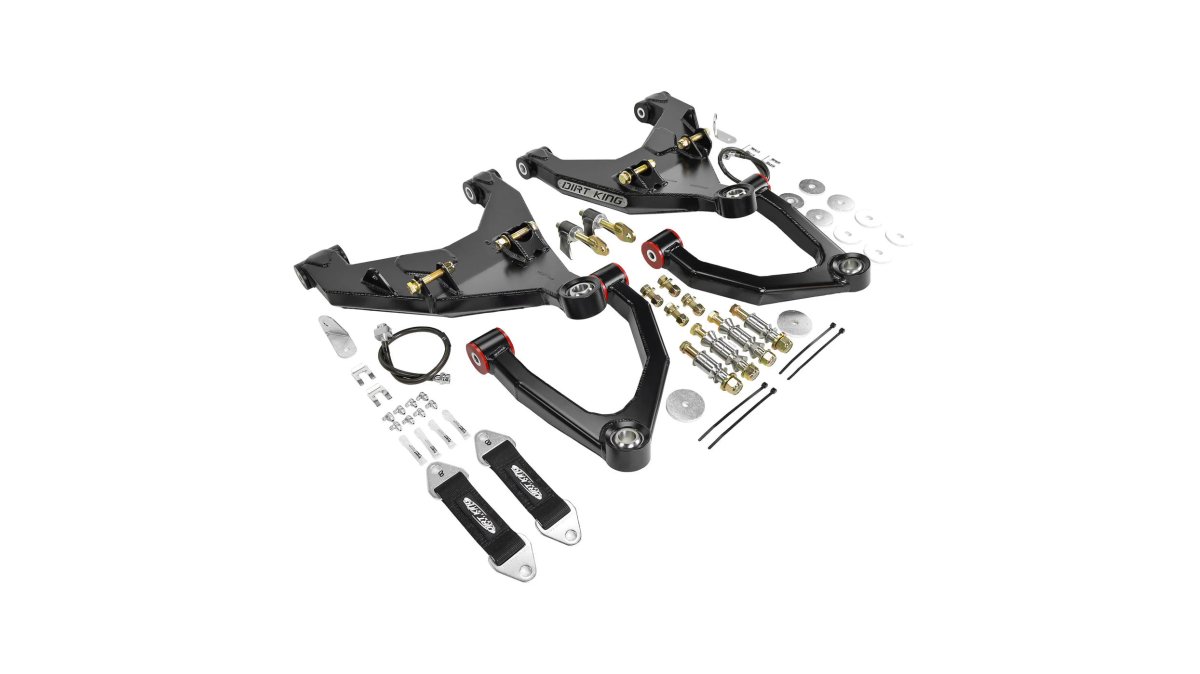
The hardware is built for abuse: greaseless SilentSpin bushings in the upper arms, PTFE-infused Delrin in the lower arms, heavy-duty Moog ball joints at the outer pivots, and replaceable aluminum skid plates protecting the lower arms.

Watch out: on 4WD trucks, achieving full travel requires a 1-inch diff drop and machining the inner CVs for more articulation. Budget for that before you commit.
You can browse the full long travel kit to see exactly what ships in the box.

Best for: rock crawlers and desert runners chasing articulation over lift height. Skip if: you want a bolt-on weekend job, because this is a bigger build.
5th Gen 4Runner Lift Kit: What Changes From Earlier Generations
That said, "fits" and "works well" are different standards. A 2-inch lift on a fifth-gen is close to the practical ceiling before geometry starts working against you.
Two things deserve attention on a lifted fifth-gen. First, alignment. Once you add lift, the factory cam tabs become the weak point, and they bend under trail load, which knocks your alignment out.
Second, track bar geometry at the rear. An adjustable rear track bar corrects the axle shift that appears once you lift, keeping the rear end planted instead of crabbing down the trail.
Fitment by trim matters too. KDSS-equipped trucks need coilovers and shocks listed for non-KDSS applications checked carefully, because the KDSS hydraulic system limits how much lift the front end will tolerate without additional correction.
Best for: fifth-gen owners planning a 2-3 inch lift who want the supporting parts sorted in one order. Skip if: you are staying at stock height, where neither part earns its cost.
4Runner Suspension Load Capacity: Matching Spring Rate to Camping Gear
Spring rate is where most 4Runner suspension for camping gear builds go wrong. Buyers match lift height to a photo they saw online, then load the truck with a rooftop tent, drawer system, fridge, and two adults, and the rear sags because the springs were never rated for that weight.
The fix is to decide your loaded weight first, then pick the spring. A mostly stock truck with occasional gear suits the 2.0 IFP setup. If you are matching spring rate to a heavy camping setup, rear multi-rate coils are the part that actually addresses load capacity rather than masking it with preload.
A common mistake is cranking preload to compensate for sag. That raises ride height without adding load capacity, and it costs you droop travel.
Best for: anyone building toward a permanent overland load. Skip if: your gear lives in a duffel bag and comes out after every trip.
4Runner Suspension for Daily Driving and Trails: Keeping On-Road Manners
A trail-capable 4Runner suspension does not have to ruin the commute, but the parts that protect on-road manners are specific, and the trade-offs are real.
Vehicle-specific valving matters more than shock diameter here, because it is tuned to the truck's weight and motion ratios rather than a generic curve.
The 2.5 DCA setup is the clearest example of adjustable on-road manners: dial compression down for the highway and the truck rides closer to stock than its capability suggests, then firm it up for a loaded highway run or a fast gravel road without touching a wrench. The trade-off is cost and complexity, two knobs per shock mean more to set up and more to get wrong if you do not baseline them. Start both knobs at the middle setting, adjust one click at a time, and change only one knob per test drive so you can feel what each adjustment actually does.
Long travel kits add width and travel but are designed, per the listing, to avoid compromising day-to-day driving.
Durability is the other half of the daily-driver equation.
A final on-road consideration is alignment and tire choice. A 2-inch lift with corrected caster and a quality all-terrain tire will feel closer to stock than a 3-inch lift on mud terrains, even with the same shocks.
Best for: one truck that has to do everything. Skip if: you have a dedicated trail rig and a separate daily.
Build Your Trail Setup at Adventure Essentials
The hardest part of a 4Runner suspension build is not choosing a shock. It is ordering a complete package where the coilovers, rear shocks, control arms, and supporting parts were designed to work together instead of hoping they do.
That is the problem we built Adventure Essentials to solve. As an authorized Dirt King dealer, we stock long travel kits and suspension systems organized by vehicle, model, and year, so you can confirm fitment before checkout rather than after. Our catalog covers the parts most builds actually need in one order: coilovers, rear shocks, upper control arms, and the small hardware that decides whether a lift holds its alignment.
If you are unsure which stage fits your truck, start with the vehicle filter and work from there. Add to cart with confidence, or reach out and we will help you assemble a complete list.
Frequently Asked Questions
What is the best 4Runner suspension for a daily driver that also hits trails?
The 2.5 DCA remote reservoir coilovers paired with matching rear shocks are the strongest dual-purpose pick. The dual compression adjusters give 10 settings per knob, so you can soften high-speed compression for washboard forest roads and firm it up for loaded highway miles. The 2.0 IFP coilovers are the budget-friendly alternative: they come preset with 2 inches of lift and outperform OE shocks on potholes and dips, though they lack the on-the-fly tuning of the 2.5 series.
How much lift do you need for trail driving in a 4Runner?
Most trail builds land between 2 and 3 inches. The Dirt King 2.0 and 2.5 coilovers come preset at 2 inches and provide up to 3 inches of lift, but Dirt King does not recommend going past 3 inches because excessive preload hurts ride quality. Beyond 3 inches you start fighting suspension geometry, upper control arm angles, and alignment. If you need more clearance for 35-inch tires, a long travel kit is the better path than stacking preload.
Does adding camping gear change which 4Runner suspension I should buy?
Yes. A roof rack, drawer system, fridge, and bumper-mounted winch add constant weight that compresses stock springs and eats into 4Runner suspension load capacity. The 2.5 DCA shocks are the better choice for loaded rigs because the compression adjusters let you add stability as payload climbs. The 2.0 IFP coilovers include a spanner wrench for preload adjustment, which helps when you install an aftermarket bumper or winch, but keep preload modest to preserve ride comfort.
Do I need upper control arms when I install a lift kit on a 5th gen 4Runner?
For the Dirt King 2.0 and 2.5 coilovers, yes. Both listings state they must be paired with aftermarket upper control arms. The 4130 upper control arms maintain proper alignment from 0 to 3 inches of lift and add roughly an inch of down travel versus stock. They also use SilentSpin bushings that need no greasing, which matters on a 5th gen 4Runner lift kit you plan to keep for years of trail use.
Can I install a 4Runner suspension kit myself?
The coilover and shock kits are direct bolt-on replacements that use factory shock mounting locations, so a confident DIYer with hand tools and a torque wrench can handle them in a driveway. Long travel kits are a different job: they include limit straps, brake lines, and tie rod extensions, and 4WD models need a diff drop kit plus inner CV machining to reach full travel. Budget for professional install on long travel, and always get a professional alignment after any lift.
Building a trail-ready 4Runner means matching spring rate, damping, and geometry to how you actually drive, not to a lift height someone else recommended. Adventure Essentials carries the Dirt King coilovers, rear shocks, long travel kits, and supporting components to put that package together in one place, with fitment organized by vehicle, model, and year. Get started with Adventure Essentials and build a suspension setup that holds up on the trail and still behaves on the drive home.
